For the sake of the grid and the earth: Why a successful and now cancelled e-bike rebate should return
With two days' notice, the Yukon government terminated their successful electric transportation rebate program: one of the best in Canada.
The fund's budget was moved to help offset the cost of people purchasing wood, propane or oil-fired home heating systems.
What was the stated goal behind this electric vehicle and e-bike rebate cancellation? To reduce our territory's winter peak electricity demand and strengthen the reliability of our isolated power grid.
Given that e-bikes reduce both power consumption AND greenhouse gases (GHGs) I don't understand the logic of this decision.
E-bikes have an incredibly low energy draw while charging. They also use far less power and fuel compared to charging electric vehicles or plugging internal combustion engine vehicles into block heaters.
With that in mind, cancelling rebates for electric vehicles does make sense. At least from the perspective of reducing demand for electricity during winter. But e-bikes? No way.
It was a record-breaking cold winter in the Yukon
To give you context, this past winter - especially mid to late December - it was very cold in the Yukon.
Temperatures dropped below -40 C for several weeks and at multiple points went lower than -50 C.
This was when our power consumption hit over 91% capacity and nearly resulted in rolling blackouts across the territory. December was a scary period to live here. Many people were in danger.
Hence, the Yukon government's desire to ease pressure on our power grid.
With their new rebates, they seek to supplement peoples' electric heating with other sources, or to avoid electric heating all together.
I am obviously in full support of a more reliable grid, and I recognize that this will take sacrifices and hard decisions.
What confuses me though is how the Yukon government laid to waste one of their best performing climate change funds - the e-bike portion of the previous rebate - to pay for this new heating program.
In response, Yukoners went on an e-bike buying spree before the rebate ended.
What our Yukon e-bike rebate program was delivering
The key details of the now-defunct rebate:
- 25 per cent of the cost of a new electric bicycle up to a maximum of $750.
- 25 per cent of the cost of a new electric cargo bicycle up to a maximum $1,500.
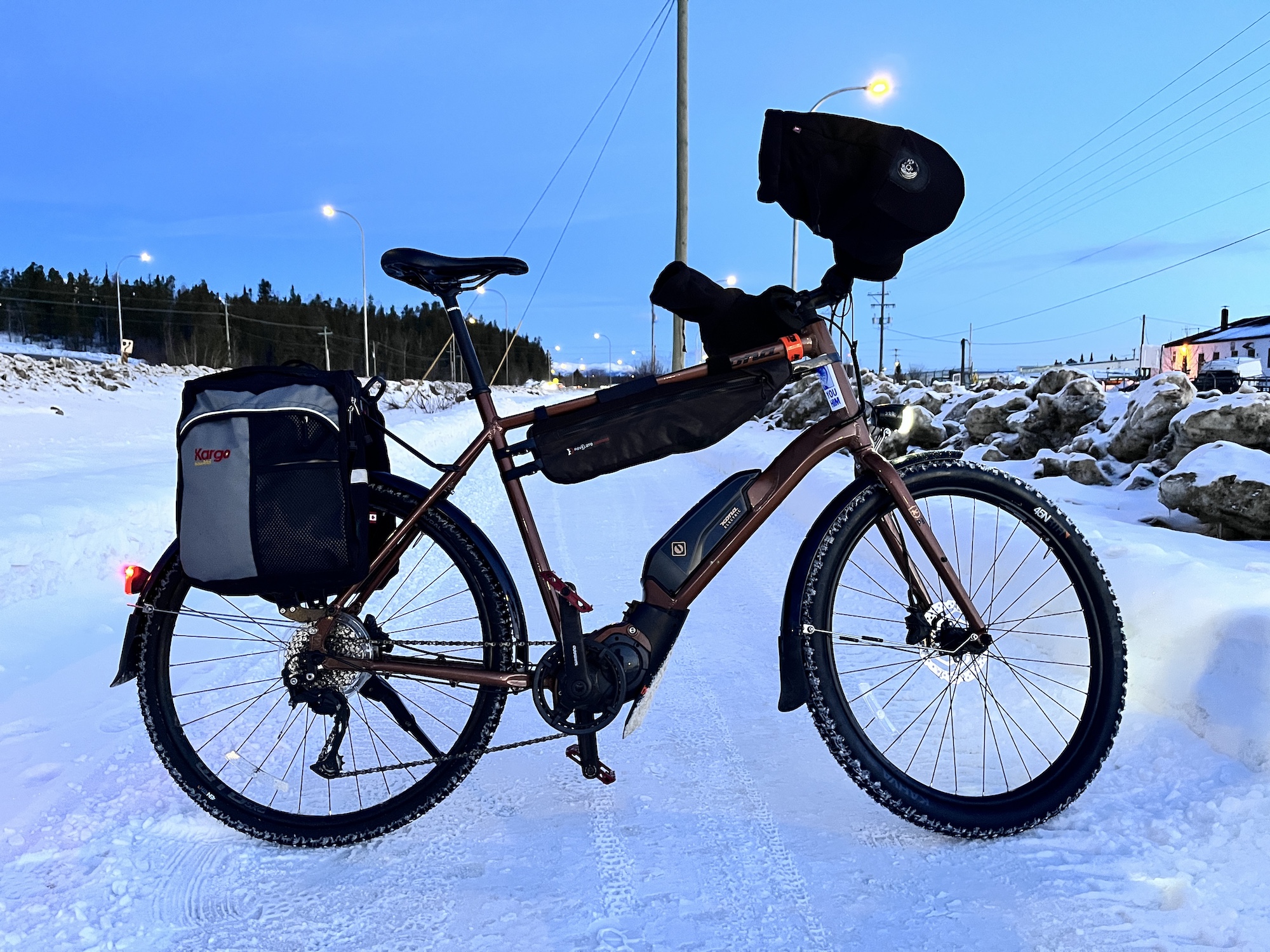
I personally bought an e-bike because of this rebate.
As for some estimates about the program's performance:
- In total, this program cost roughly $600,000 per year, or $2 million over its lifetime.
- Approximately 2,000 e-bikes were sold in the Yukon thanks in part to this rebate, although that number is likely higher now.
- In Whitehorse, there are roughly 15,000 one-way commutes every day, of any type. In 2021, 3% of those were by bike and 40% of those - and growing - were on e-bikes. Now, four years later, that percentage is probably much higher.
If an e-bike rider replaces even ONE cold-weather vehicle trip in Whitehorse they have already reduced net grid demand.
In other words, e-bikes reduce strain on the grid, they don't add to it.
If something reduces strain on our isolated power grid, shouldn't that be encouraged by the Yukon government?
By the way, according to a 2021 transportation report about 70% of commuters in Whitehorse drive alone with a 13-minute average commute distance. For comparison, commuters in the Greater Toronto Area (GTA) have a 35-minute average one-way commute in a far more stressful and higher-stakes environment.
How more people charging e-bikes to ride them doesn't strain the grid, but reduces it
Plugging in a conventional vehicle's block heater during the day or overnight, or charging your electric vehicle overnight strains the grid much, much more than an e-bike.
- Plugging in a vehicle - block heater or electric - draws vastly more power than charging an e-bike. Roughly, 2,000 times the amount of energy per equivalent trip replaced.
- One electric vehicle uses 10 kWh to charge overnight. That's enough to charge 40 e-bikes.
- Over the period of 6 months, the above-mentioned 2,000 e-bikes in the Yukon likely consume about 25% of the energy it takes to charge a single electric vehicle during the same timeframe.
Yet another benefit of more e-bikes: A significant reduction in GHG emissions and fuel costs
In the Yukon, when you don't plug in a vehicle overnight you save our public utility a lot of diesel per year. An estimated amount is $30,000 annually in avoided fuel costs, not to mention the extra GHG emissions to burn that diesel.
This savings doesn't pay for the e-bike program on its own, but it does help take some of the sting out.
As transportation is the third-largest household cost for Yukoners, this e-bike rebate could and did put real money back in people's pockets.
With regular gasoline now at $1.98 per litre and expected to go even higher, it's also a wise personal financial decision to start commuting via bicycle. E-bikes make that decision easier as they require less effort and time to go the same distance compared to a regular bike.
Budget decisions are hard, I get it
I worked in the Yukon government for almost 10 years. I know that moving existing money is almost always easier than finding new money. This e-bike rebate was an existing budget line. The Dependable Grid Program needed a budget line.
The people who care deeply about e-bikes — enthusiasts, commuters or climate advocates — are a motivated but numerically small group.
In political terms, they can be managed.
A repeat of last December's power crisis cannot, hence the repeal of our Clean Energy Act and its related electric vehicle and e-bike rebate cancellation.
How active transportation has changed in Whitehorse over the past 25 years
I've been bike commuting for more than three decades. Over that time, I've watched Whitehorse transform as investments in safer and more connected active transportation routes made regular cycling possible for more people.
Aided by the e-bike rebate program that started in 2022, something remarkable happened: cycling stopped being merely a hobby for the hardcore and became something ordinary people chose to do.
The bikes I see on my routes to work aren't ridden only by people who would have cycled anyway. They're ridden by people for whom an e-bike finally made a commute to and from work possible.
These are people with jobs. Older people. People who pay taxes. People with young children, sometimes multiple kids on the same cargo e-bike. People with heavy bags to carry and not the personal power or budget to move them with an expensive electric or ICE vehicle.
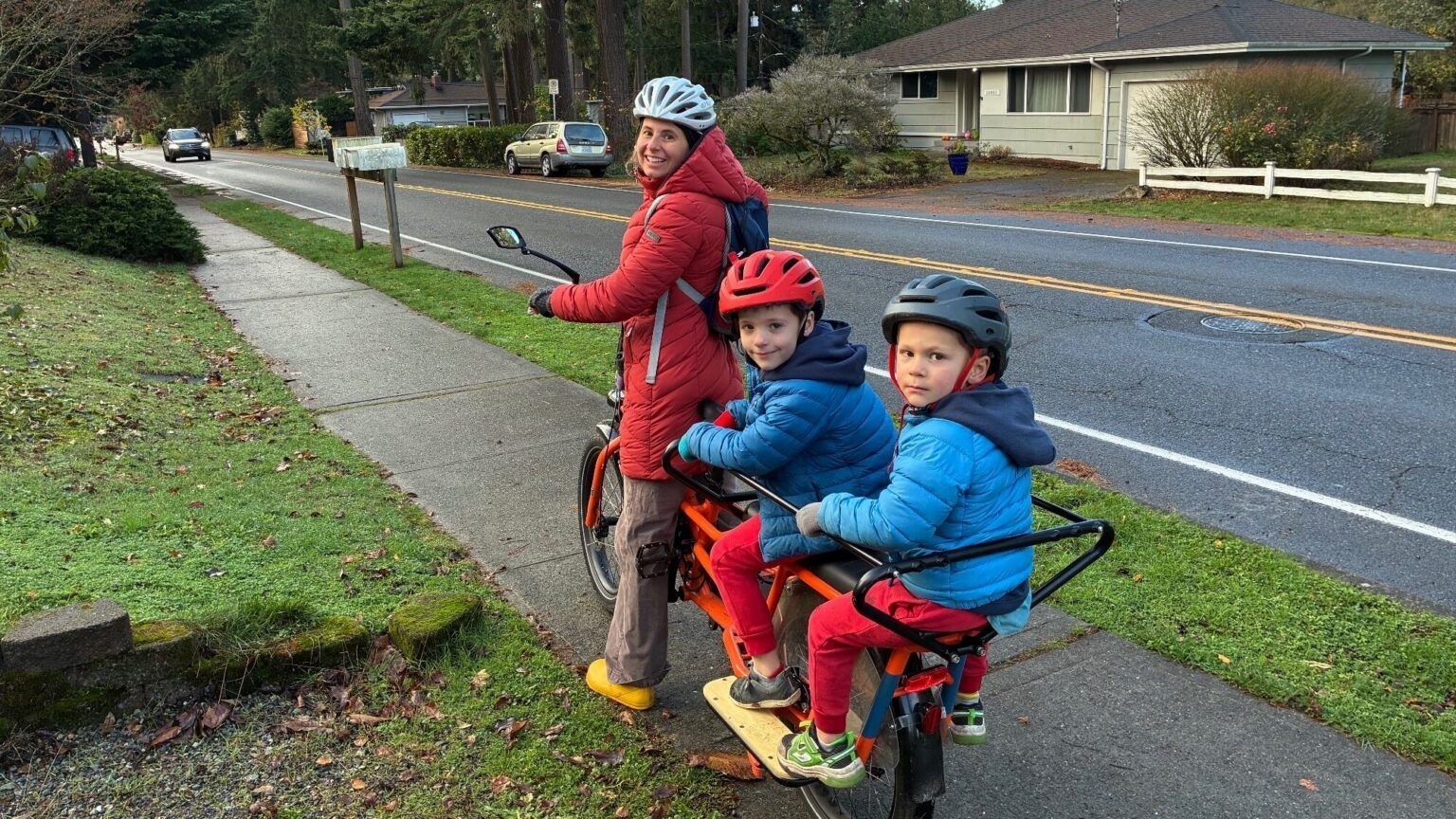
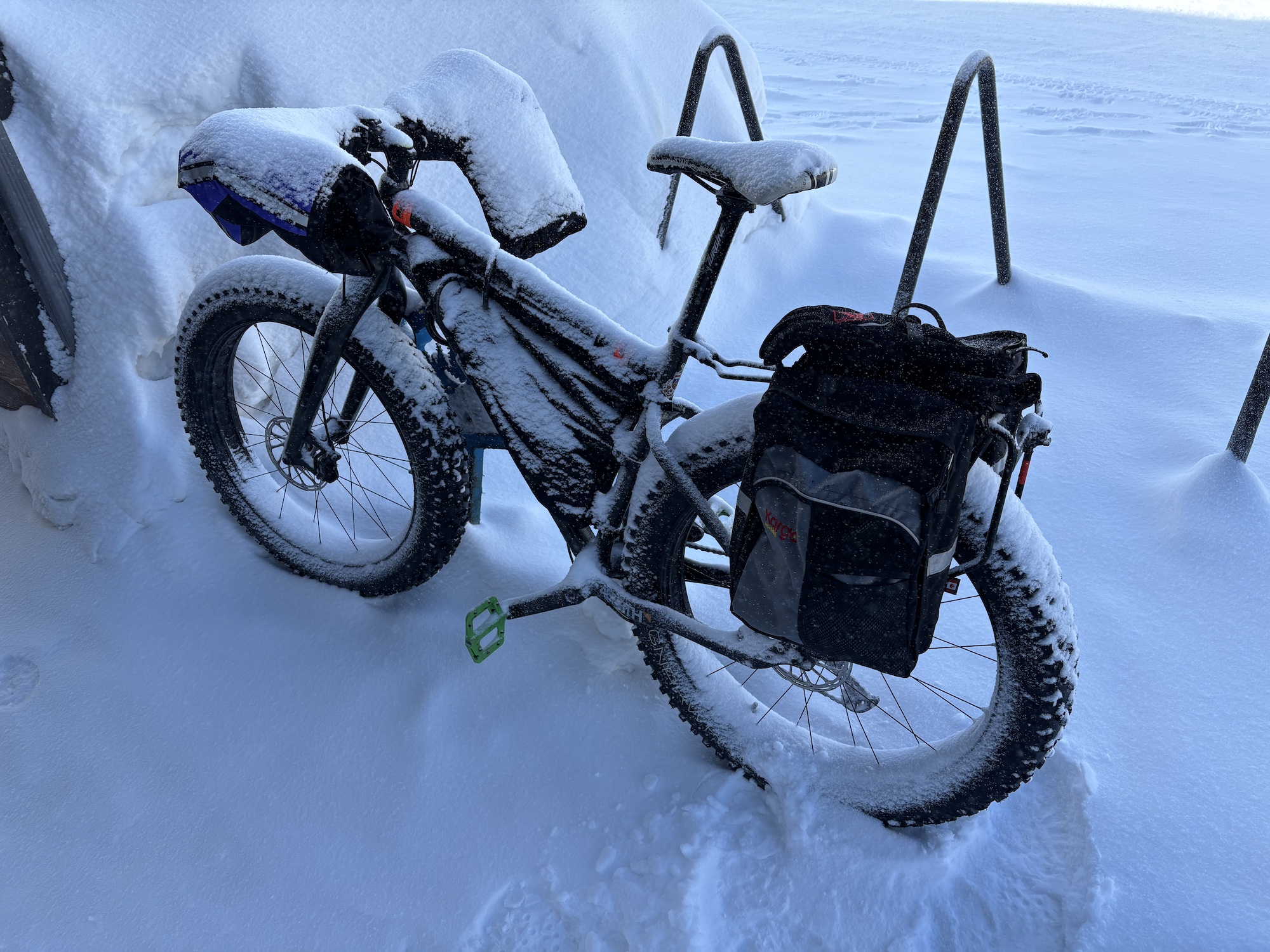
And it's not just e-bikes; there's also many who are just riding regular bikes. Whitehorse's multi-use trail maintenance has improved so that most of the time, fat bikes in winter are not required (okay, except sometimes; see below).
That shift in people choosing personal transport by bicycle? It matters.
This is also why I'm sorry to see the Yukon government's e-bike rebate cancelled, even though I understand the pressures that led there. I hope the e-bike rebate can find its way back, for the sake of our power grid and the earth.